It's been a little over a month since I last posted in here, but of course I have thoughts churning in my head that I need to get out, so here I am once again.
So we are on day 50-something of staying at home to prevent the spread of the coronavirus, as Trevor Noah likes to remind everyone at the beginning of "The Daily Social Distancing Show." However, the governor of my state, Larry Hogan, recently announced that as of today Maryland can transition from a "Stay Home Order" to a "Safer At Home Order" as of today. Yeah, a lot of government jargon for transitioning to phase one of reopening.
But. The way the news presented it was as if it was a state-wide reopening, when it's really just that individual counties have permission to begin that process. I don't know why we don't just go county/region-by-region as New York has. Because I currently live in Prince George's County, which has been the hot zone in MD for this infection, and we are definitely not ready to reopen yet. Unfortunately.
And guess what? I think this lockdown sucks, and I want it to end sooner rather than later. And/but/and I ALSO want to be safe when doing so, and to minimize necessary deaths and save lives wherever possible.
I've just been so frustrated at the discourse around reopening. First off, everyone seems to think the economy is either "open" or "closed," when truly we've been something in the middle this whole time, because of course essential businesses are essential.
And then it has taken on a hyper-partisan tone, where conservative = prioritizing the economy over lives and liberal = comfortable with a strict lockdown no matter how long that goes on. It may be a reaction to the Trump administration's egregious mishandling of this pandemic from the beginning, but in actuality "reopening" is far more complex than that.
A friend on Facebook suggested that Governor Hogan was pressured by the lockdown protesters into reopening prematurely. Her husband questioned this, and I have to say I agree with him. From what I had been reading, Hogan had always been about making sure certain measures were in place before beginning reopening. And yeah, they aren't for much of the Baltimore-Washington region, so I am wondering why this "reopening" was announced as if it is a state-wide thing. And I'm wondering even more why more of those 500,000 covid-19 tests Hogan got from South Korea haven't made there way to PG County.
But overall I still like and respect Larry Hogan. He's the rare Republican who hasn't sold his soul to the Trumpsters, so I don't know why he would now. And he seems to have always had a plan for combating this virus beyond just sitting on his ass like the guy in the White House.
Because the truth is that we need to be taking measures to gradually, safely reopen at some point. Saving lives matters, but so do people's livelihoods, and their mental health/quality-of-life, etc. etc. I accept that Prince George's County isn't there yet, and perhaps won't be for awhile. But I wish there was more nuanced discourse about the how and when, and yes, why, of reopening.
Friday, May 15, 2020

Sunday, April 5, 2020
Notes From the Coronavirus Apocolypse (And Other Notes) Part II
I last posted in here three weeks ago, and things on the coronavirus front are even more dire. Maryland has a "stay at home order," which basically means Larry Hogan is taking this shit seriously and legally enforcing social distancing.
And just like 3 weeks ago, I've still been experiencing a roller coaster of emotions. On Twitter, Shannon Dingle, who lost her husband in a freak accident last year, named the emotion all of us have been going through as grief, and I was like, ya know what, I think she is on to something.
Of course she is. Our culture isn't great with grief, and even worse when the grief isn't over an actual death. But grappling with our sense of "normal" changing overnight is grief too. And it explains the emotional roller coaster: I keep cycling back and forth through the "stages," because grief isn't linear. I've arrived at acceptance a few times since three weeks ago, only to go back to denial or anger or sadness.
The anger has been interesting. There has been the (perhaps petty?) anger over the overall crumbliness of life with necessitated social distancing, over the lack of choice and the frustration of canceled plans, but then there is also anger over the incompetence of our administration and over how unprepared America was to deal with a pandemic even before Trump got into office. And the anger at the partiers flaunting social distance, although if I am going to be honest, and I am because this is my blog, I'm also angry at those who in THEIR anger become smug and self-righteous about staying home. And the people who spread misinformation online. Yeah. Lots of anger for lots of reasons.
But I do arrive at moments of acceptance. And I've also been heartened by human resilience and the way people find joy and beauty even in the midst of panic, uncertainty, illness, and, well, crap. On Monday, a former high school classmate of mine live-streamed an impromptu "socially distanced" wedding (she had to cancel her plans for an April wedding but wanted to seal the deal anyway.) It was her and her new husband, a few family members (fewer than 8), and the priest in a church parking lot, and it was somehow more beautiful than a run-of-the-mill wedding with a hundred guests.
And then there was the video of the woman singing Leonard Cohen's "Hallelujah" from a balcony in Italy. Such a beautiful song to begin with, and even more poignant in these tumultuous times.
And now some entertainment notes that DON'T have directly to do with the coronavirus, because my mind needs a respite once in a while.
1) I finished reading "The Woman At the Window." And while I said this wasn't about coronavirus, I do have to note that reading a novel about an agoraphobic felt weirdly timely during the coronavirus stay-at-home order. But anyway...while this novel was extremely similar to another thriller about a woman with mental health and drinking issues who witnesses a crime, "The Girl on the Train" (even the titles are similar), I felt this one was better written and more compelling than "The Girl on the Train." A film adaptation of "The Woman at the Window" was supposed to be released in May, but at this point, who knows?
2) I've also been getting in to the miniseries adaptation of "Little Fires Everywhere" lately. I think I may even like it more than the book. But among other things, the 90s-era soundtrack is awesome. Especially the Alanis Morrisete additions. "Uninvited" fit the scene perfectly, but Izzy playing a violin rendition of "You Oughta Know" was even more perfect.
And just like 3 weeks ago, I've still been experiencing a roller coaster of emotions. On Twitter, Shannon Dingle, who lost her husband in a freak accident last year, named the emotion all of us have been going through as grief, and I was like, ya know what, I think she is on to something.
Of course she is. Our culture isn't great with grief, and even worse when the grief isn't over an actual death. But grappling with our sense of "normal" changing overnight is grief too. And it explains the emotional roller coaster: I keep cycling back and forth through the "stages," because grief isn't linear. I've arrived at acceptance a few times since three weeks ago, only to go back to denial or anger or sadness.
The anger has been interesting. There has been the (perhaps petty?) anger over the overall crumbliness of life with necessitated social distancing, over the lack of choice and the frustration of canceled plans, but then there is also anger over the incompetence of our administration and over how unprepared America was to deal with a pandemic even before Trump got into office. And the anger at the partiers flaunting social distance, although if I am going to be honest, and I am because this is my blog, I'm also angry at those who in THEIR anger become smug and self-righteous about staying home. And the people who spread misinformation online. Yeah. Lots of anger for lots of reasons.
But I do arrive at moments of acceptance. And I've also been heartened by human resilience and the way people find joy and beauty even in the midst of panic, uncertainty, illness, and, well, crap. On Monday, a former high school classmate of mine live-streamed an impromptu "socially distanced" wedding (she had to cancel her plans for an April wedding but wanted to seal the deal anyway.) It was her and her new husband, a few family members (fewer than 8), and the priest in a church parking lot, and it was somehow more beautiful than a run-of-the-mill wedding with a hundred guests.
And then there was the video of the woman singing Leonard Cohen's "Hallelujah" from a balcony in Italy. Such a beautiful song to begin with, and even more poignant in these tumultuous times.
And now some entertainment notes that DON'T have directly to do with the coronavirus, because my mind needs a respite once in a while.
1) I finished reading "The Woman At the Window." And while I said this wasn't about coronavirus, I do have to note that reading a novel about an agoraphobic felt weirdly timely during the coronavirus stay-at-home order. But anyway...while this novel was extremely similar to another thriller about a woman with mental health and drinking issues who witnesses a crime, "The Girl on the Train" (even the titles are similar), I felt this one was better written and more compelling than "The Girl on the Train." A film adaptation of "The Woman at the Window" was supposed to be released in May, but at this point, who knows?
2) I've also been getting in to the miniseries adaptation of "Little Fires Everywhere" lately. I think I may even like it more than the book. But among other things, the 90s-era soundtrack is awesome. Especially the Alanis Morrisete additions. "Uninvited" fit the scene perfectly, but Izzy playing a violin rendition of "You Oughta Know" was even more perfect.
Tuesday, March 17, 2020
Notes from the Coronavirus Apocalypse - Part I
I thought now would be a perfect time to go back to this blog that I never write in, because I sense I am living in historical times right now that demand a record. But not happy historic times.
No, it's now been a few days (not sure exactly how many) since the World Health Organization declared the new coronavirus, also known as COVID-19, a global pandemic. During that time, as the virus spread from China across the globe including into nearly every state in the US, people stockpiled hand sanitizer (ok, I get it) and toilet paper (why??), governments everywhere encouraged hand washing and "social distancing," and sports leagues, restaurants, schools, and more shut down.
It's been an emotional roller coaster of a few weeks for me. Oh, and I started a new job on March 2 as well.
So I feel like I need somewhere I can express my honest emotions, not the emotions I feel I'm "supposed to" have at this time. This blog feels like a safe place to do that, since it doesn't get much readership.
So back to that emotional roller coaster...I've felt pretty much every emotion one can feel over the past couple of weeks: anxiety, fear, frustration, disappointment, "selfish anger" as John Oliver put it...and maybe some anger that is less selfish as well. I dunno. Oh, right, there's the guilt. That's been a dominant emotion for me behind all the other emotions.
It's caused me to realize how much a sense of guilt is wrapped up in my normal, garden-variety generalized anxiety. Guilt that my feelings are "bad" and "wrong," that I'm selfish or childish or petty. And then now there's also the guilt that I may harm people without even realizing it.
This for me has been compounded by the news media's coverage of the coronavirus as much as the anxiety/fear/panic. That's what's unique about this damn virus, that a sizable number of people get it and spread it while having symptoms no more severe that those of a cold. And yeah, though I've told few people, I haven't been feeling altogether well for this past week and a half. Thankfully no one in my household or at work (seems to be) sick. But who knew what anxiety having a cold in the time of coronavirus could cause?
And then the other emotion I forgot to mention, which is also wrapped up with all the others, is confusion. I understand a lot from reading probably too much news on this virus. I understand that social distancing is needed to "flatten the curve" and not overwhelm our healthcare system. But what exactly does social distancing entail? It changes every day. First it was no large group gatherings, which went from like 500 people to 250 to 50 to like 10! I'll do what the CDC and local governments recommend to keep this damn virus from spreading out of control. But then there are times when I wonder if we are going too far, and then I feel guilty about THAT. Like...why are the libraries closed to patrons who want to check out books/DVDs/whatever chosen materials? Are self-checkouts and extra hand sanitizer not enough?
I of course am concerned less for me and more for the more vulnerable in our society (my dad is 81). But I'm also just looking forward to all of this being over and life returning to normal. Because coronavirus is a bitch in all kinds of ways, including how it's disrupting our economy and just our daily life. And if that's "selfish anger," well, that's what I got right now.
No, it's now been a few days (not sure exactly how many) since the World Health Organization declared the new coronavirus, also known as COVID-19, a global pandemic. During that time, as the virus spread from China across the globe including into nearly every state in the US, people stockpiled hand sanitizer (ok, I get it) and toilet paper (why??), governments everywhere encouraged hand washing and "social distancing," and sports leagues, restaurants, schools, and more shut down.
It's been an emotional roller coaster of a few weeks for me. Oh, and I started a new job on March 2 as well.
So I feel like I need somewhere I can express my honest emotions, not the emotions I feel I'm "supposed to" have at this time. This blog feels like a safe place to do that, since it doesn't get much readership.
So back to that emotional roller coaster...I've felt pretty much every emotion one can feel over the past couple of weeks: anxiety, fear, frustration, disappointment, "selfish anger" as John Oliver put it...and maybe some anger that is less selfish as well. I dunno. Oh, right, there's the guilt. That's been a dominant emotion for me behind all the other emotions.
It's caused me to realize how much a sense of guilt is wrapped up in my normal, garden-variety generalized anxiety. Guilt that my feelings are "bad" and "wrong," that I'm selfish or childish or petty. And then now there's also the guilt that I may harm people without even realizing it.
This for me has been compounded by the news media's coverage of the coronavirus as much as the anxiety/fear/panic. That's what's unique about this damn virus, that a sizable number of people get it and spread it while having symptoms no more severe that those of a cold. And yeah, though I've told few people, I haven't been feeling altogether well for this past week and a half. Thankfully no one in my household or at work (seems to be) sick. But who knew what anxiety having a cold in the time of coronavirus could cause?
And then the other emotion I forgot to mention, which is also wrapped up with all the others, is confusion. I understand a lot from reading probably too much news on this virus. I understand that social distancing is needed to "flatten the curve" and not overwhelm our healthcare system. But what exactly does social distancing entail? It changes every day. First it was no large group gatherings, which went from like 500 people to 250 to 50 to like 10! I'll do what the CDC and local governments recommend to keep this damn virus from spreading out of control. But then there are times when I wonder if we are going too far, and then I feel guilty about THAT. Like...why are the libraries closed to patrons who want to check out books/DVDs/whatever chosen materials? Are self-checkouts and extra hand sanitizer not enough?
I of course am concerned less for me and more for the more vulnerable in our society (my dad is 81). But I'm also just looking forward to all of this being over and life returning to normal. Because coronavirus is a bitch in all kinds of ways, including how it's disrupting our economy and just our daily life. And if that's "selfish anger," well, that's what I got right now.
Friday, August 9, 2019
Goodreads Book Review: The Art of Racing in the Rain
 The Art of Racing in the Rain by Garth Stein
My rating: 3 of 5 stars
It's been awhile since I've written one of these.
Garth Stein's The Art of Racing in the Rain had been on my reading list for awhile, but now that it's been adapted into a film, I felt I finally had to get around to reading it.
And I seem to be dissenting from popular opinion (or at least popular opinion as reflected on Goodreads) on this novel. Because while I definitely found The Art of Racing in the Rain to be an enjoyable read, when I reflect upon it, I think this book is really just...ok...definitely not as outstanding as some make it out to be.
I would give it 3.5 starts, but because Goodreads doesn't allow for half-stars I'm rounding down to 3.
I wasn't put off by the premise of the dog-as-narrator, but in this case it didn't fully work for a few reasons. Its hard not to compare it to another popular doggy-narrated book-turned-film, A Dog's Purpose. That book, which was super-sentimental, also got 3 stars from me. However, the voice of the narrator (who is actually multiple reincarnated dogs) actually approached what the inner experience of a dog might be like - navigating the world through a mix of the five senses and the emotional energy of the humans around him/her.
Not Enzo. The Art of Racing in the Rain makes it explicit very early on that Enzo is "not like other dogs." Enzo is a philosophizing dog who longs to be human. His understanding of the world has been shaped through the TV programs his owner Denny leaves on for him, including a documentary about Mongolia that suggested that after a dog dies it becomes a man.
Did I mention that Enzo likes to philosophize? This is what made the narration not work for me. I can suspend disbelief to allow for a dog to narrate a book, but Enzo's deep and specific philosophies and beliefs about life were just distracting. They would take me out of the novel, because I'd start wondering how much the dog narrator was just a stand-in for the author's own beliefs. Stein, like human main character Denny, is a racecar enthusiast from the Pacific Northwest, so it's clear is own experiences did make their way into this book. But basically, when it comes down to it, Enzo is just too human, and not dog enough.
And some of this human-like dog's ideas and opinions are just aggravating. A human being who goes around using the word "manifest" ("What you manifest is before you") makes me want to bang my head up against something; it's not less annoying when that character is a dog.
That being said, Enzo is also witty and intelligent, and, like most dogs, he is loving and faithfully devoted to his family.
That family is Denny, Denny's wife, Eve, and their daughter Zoe. When it comes down to it, The Art of Racing in the Rain is a family drama. The love that this family has for each other and the dog's central place in it are woven throughout the story, but the story itself is somewhat conventional and cliché. Terminal illness, evil/cowardly in-laws, false accusations, and a fierce custody battle are major elements that provide drama but never rise above the ordinary. And the unreliable narration that is employed in the courtroom scenes (which Enzo "reconstructs" from television crime dramas") again required too much suspension of belief for me.
I am curious how much the film changed from the novel in order to a achieve a PG rating. Even though they both contain some heavy themes, The Art of Racing in the Rain comes across as much more "adult" in the way its told than A Dog's Purpose. It might be the writing style or the word choice (Enzo, of course, has a more extensive vocabulary than many-a-human). It's rarely explicit, but there are a few sex scenes that are just....weird (and more graphic than the "wrestling" described by the dogs in A Dog's Purpose).
Of course, race car metaphors are predominant in this book. For car racing enthusiasts, this might be a plus, but for me they became strained after awhile.
But I did enjoy The Art of Racing in the Rain. As conventional as the plot was, it was a unique novel in many ways. Just not a masterpiece.
View all my reviews
Tuesday, July 24, 2018
Goodreads Book Review: Lucky Boy
 Lucky Boy by Shanthi Sekaran
My rating: 4 of 5 stars
I can't remember how I first heard about Shanthi Sekran's novel Lucky Boy, but when I added it to my reading list I had no idea it would prove to be as timely as it did. Lucky Boy is the story of two women and their love for one "lucky boy." It is also a story of undocumented immigration and a system that wrenches children from their parents. The novel is a compelling, beautifully written reminder of the human faces behind an issue that is hotly politicized but at its basis about human beings and human rights.
The story is told from alternating points of view of two women. Solimar "Soli" Castro Valdez is, at 18 years old, on the cusp of adulthood and living in a depressed, rural village outside of Oaxaca, Mexico. Soli longs for more than life in her village has to offer, so she decides to embark on a perilous journey to Berkley, California, where her cousin Sylvia already lives. When she shows up without documents at Sylvia's doorstep, she is pregnant with the son she will name Ignacio.
Solimar's journey to America inside and on the top of freight trains is filled with the terror and brutality that one might expect but also with moments of joy and excitement. (view spoiler). When she arrives in America, the details of her everyday life as a housekeeper and nanny are juxtaposed with the fear she lives in because of her undocumented status. Eventually she is placed in an immigrant detention center and Ignacio is placed into the care of Kavya Reddy and her husband, Rishi.
Kavya recently awakened to her desire to have a child, but when she struggles to conceive, she and Rishi explore fertility treatments, adoption, and, finally, much to the chagrin of Kavya's traditional Indian parents, fostering. As she and Rishi watch Ignacio grow from infancy to toddlerhood, they nurture hopes of being able to adopt him and suppress their knowledge that Ignacio's birth mother is alive and well and fighting to be reunited with her child.
Sekram treats all her major characters sympathetically. Both Soli and Kavya are clearly bound by love to Ignacio, who truly is a lucky boy to be placed in a loving, stable home rather than stuck in a "tender age shelter." Rishi plays somewhat of a lesser role, but he too comes to fully embrace fatherhood. Sekram draws upon her personal experience as an Indian American in depicting Kavya and Rishi, and she contrasts their experiences as the children of immigrants with those of Soli while showing how they are alike as well. She also draws upon her experiences as a resident of Berkely, depicting the hipsterish "Gourmet Ghetto" and nearby Silicon Valley. Rishi's job at "Weebies," an internet mega-provider of baby gear, wasn't as believable to me, though. He works as a ventilation engineer on Weebies' sprawling campus, and his job seems to be a metaphor for something to do with purity, babies, keeping babies safe...I wasn't exactly sure. I know Silicon Valley is a strange place, but unlike other details in the book, it just didn't ring true.
But that's a minor complaint. As well as being incredibly timely and humanizing, Lucky Boy is, aside from a few instances of purple prose, a beautifully written story. Evocative and moving, it is a must-read for the times we live in.
View all my reviews
Tuesday, March 27, 2018
Goodreads Book Review: So You've Been Publicly Shamed
 So You've Been Publicly Shamed by Jon Ronson
My rating: 4 of 5 stars
I wasn't really sure how to peg Jon Ronson's "So You've Been Publicly Shamed." It's not the sociological research-meets-self-help that Brene Brown is known for, despite covering similar territory to her research on shame. But then I read the endorsement on the back cover by Jon Stewart, where he refers to Ronson's work as "investigative satire," and yes, that seems to be the best way to characterize it. Despite the heavy subject matter, it started out funny and immensely readable, with one story flowing effortlessly into another. Somewhere in the middle, it started to lag for me. Still, I am giving it 4 stars, rounding up from 3.5, merely because it sheds light on a phenomenon that is so ubiquitous today.
Despite the title, this book deals with a very specific type of shame unique to the 21st century: internet shame. Beyond that, it focuses mostly on the shame delved out on one social media platform in particular: Twitter. That may seem a little narrow, but people who have immersed themselves deeply into Twitter have attested to it being especially toxic. I wish Ronson had explored this more...what is it about this specific platform, which is the common denominator in the stories he tells about people who have been recipients of public shame?
The stories Ronson tells are of people who have erred in some way, shape or form only to find themselves victim to a form of mob "justice" that goes as far as receiving death threats and calls for them to be fired. Their "crimes" run the gamut from telling crude or tasteless jokes to plagiarism. These individuals are not necessarily all blameless, but in all cases the backlash they receive is vastly disproportionate to their initial "crimes."
In between these stories, Ronson explores the history of public shaming (think 18th-century stocks) and the ways it is used (or rejected) in our contemporary justice system. He also explores research which might provide rational for this phenomenon, and in the process clarifies misconceptions about the Zimbardo research study taught in virtually every psychology program. Finally, he explores the psychological ramifications of shaming on the shamee. It is here that his book is most reminiscent of Brene Brown's work. Clearly shame, rather than being a motivator, can have devastating emotional effects on the recipient.
In the end, "So You've been Publicly Shamed" is inconclusive, and I felt it ended on a kind of pessimistic tone. The largest takeaway was that feedback loops are at work in people's online behavior: people are reinforced for having the "correct" opinions which keeps discourse narrow, with people afraid to voice dissent for fear of being shamed. I wanted more on this: people are afraid of stepping out of line, yes, but do people join in with the shamers so as to not align with the shamee and become shamed themselves?
I also was left with a feeling of "what do we do now" other than just step away from the internet or particularly toxic platforms. A common thread in the stories that Ronson tells is that people who take part in heaping cruelty on others were motivated by feeling that they were actually doing something good. In fact, a certain type of "callout culture" that easily turns into shaming has become prevalent in social justice circles online. Thankfully, there are people within activist circles who are "calling out" callout culture and offering alternatives for sociopolitical engagement minus the shame. Dropping a few links here:
https://www.theodysseyonline.com/call...
http://nique.net/opinions/2018/02/11/...
https://thebodyisnotanapology.com/mag...
So while I wanted a little more from Jon Ronson with this book, it is a very necessary one for today's society and a worthy read for those trying to navigate the online world with their sanity intact. And perhaps tread lightly on Twitter!
View all my reviews
Friday, November 10, 2017
#NotAllMen, But #YesAll Women (#MeToo)
In the weeks since the allegations against filmmaker Harvey Weinstein sparked the #MeToo Movement, more allegations of sexual abuse have come out, both in and outside of Hollywood.
I never felt comfortable posting the hashtag. I've been lucky in that I've only experienced the mildest of street harassment, and I felt like I would be taking away from survivors' accounts of "real" abuse. But the more I saw countless friends and family post the hashtag, some expressing the same sentiments as mine, the more I saw just how prevalent harassment and abuse against women are, and that ALL experiences of it, from the most mild to the most heinous, are part of the same toxic system.
#MeToo also had me reflecting on experiences that I had just dismissed as "normal" before. The two that stand out to me were both incidents of being hit on by drunk men. One was on a train on the way back from NYC. I had walked through several jam-packed cars to FINALLY find an open seat...and when the man sitting next to me started talking to me, I discovered why that seat had remained open. The second was when a friend and I went to see her cousin's band perform outside of Ocean City. Both times I felt uncomfortable, but also mildly amused and even a bit flattered...because well, when you have low self-esteem you take any attention you get.
But though I brushed it aside, both times I was obviously uncomfortable enough to attract the notice of other people, and I am grateful for those people, both men and women, for checking to see if I was okay.
Unwanted attention is just that, unwanted. Harassment is not flattering. And while these experiences are obviously MUCH milder than the allegations of assault that have come to light recently, they shouldn't be normalized. I shouldn't have to live in a world in which this is just par for the course for "yes, all women" or one in which I have to adjust my behavior to "protect myself" enough to merely operate in this world.
As stated above, I am grateful for the people who have the decency and courage to speak up when they witness ANY level of harassment. And I am grateful to have many wonderful men in my life who treat women with basic human dignity. Men aren't the problem. The patriarchy is. And as the allegations against Kevin Spacey have shown, not only women are victims. "Patriarchy" is more about the powerful exploiting and abusing the less powerful...who yes, often are women, but not always.
And it's not just a Hollywood problem; this abuse is prevalent in all industries. As former Fox News host Gretchen Carlson said recently on The Daily Show, it's not a liberal or a conservative problem, a Democrat or Republican issue.
But there is good in all of this coming to light. It reminds me of what a friend was saying after Charlottesville...whether the disease is racism or misogyny and abuse, you don't treat a disease that remains dormant. Maybe now we'll finally start treating our societal sickness, not just in Hollywood, and not just in politics, but everywhere.
I never felt comfortable posting the hashtag. I've been lucky in that I've only experienced the mildest of street harassment, and I felt like I would be taking away from survivors' accounts of "real" abuse. But the more I saw countless friends and family post the hashtag, some expressing the same sentiments as mine, the more I saw just how prevalent harassment and abuse against women are, and that ALL experiences of it, from the most mild to the most heinous, are part of the same toxic system.
#MeToo also had me reflecting on experiences that I had just dismissed as "normal" before. The two that stand out to me were both incidents of being hit on by drunk men. One was on a train on the way back from NYC. I had walked through several jam-packed cars to FINALLY find an open seat...and when the man sitting next to me started talking to me, I discovered why that seat had remained open. The second was when a friend and I went to see her cousin's band perform outside of Ocean City. Both times I felt uncomfortable, but also mildly amused and even a bit flattered...because well, when you have low self-esteem you take any attention you get.
But though I brushed it aside, both times I was obviously uncomfortable enough to attract the notice of other people, and I am grateful for those people, both men and women, for checking to see if I was okay.
Unwanted attention is just that, unwanted. Harassment is not flattering. And while these experiences are obviously MUCH milder than the allegations of assault that have come to light recently, they shouldn't be normalized. I shouldn't have to live in a world in which this is just par for the course for "yes, all women" or one in which I have to adjust my behavior to "protect myself" enough to merely operate in this world.
As stated above, I am grateful for the people who have the decency and courage to speak up when they witness ANY level of harassment. And I am grateful to have many wonderful men in my life who treat women with basic human dignity. Men aren't the problem. The patriarchy is. And as the allegations against Kevin Spacey have shown, not only women are victims. "Patriarchy" is more about the powerful exploiting and abusing the less powerful...who yes, often are women, but not always.
But there is good in all of this coming to light. It reminds me of what a friend was saying after Charlottesville...whether the disease is racism or misogyny and abuse, you don't treat a disease that remains dormant. Maybe now we'll finally start treating our societal sickness, not just in Hollywood, and not just in politics, but everywhere.
Monday, October 16, 2017
Trevor Noah Live
I have been a fan of Trevor Noah since he replaced Jon Stewart as the head of The Daily Show. No, Trevor is NOT Jon Stewart, but I've found him to have his own unique brand of thoughtful hilarity. And so I jumped at the chance to see him perform at the Homecoming celebration at UMBC, my alma mater. He is also doing an upcoming performance at the Hippodrome in Baltimore, but tickets started at $80, whereas tickets to the UMBC show were $35. Plus UMBC is after all my alma mater. Although I had forgotten just how uncomfortable the seats in UMBC's RAC Arena are, seeing Trevor perform live in so personal a setting was well worth it. It also gave me the opportunity to meet a current study-abroad student from England.
While Trevor's stand-up act is different from his satire of current events on The Daily Show, he did touch upon politics and current events, from the recent "once-in-a-lifetime" hurricanes (how many lifetimes are we living?!) to, yes, Donald Trump (where his refrain was Donald...J... Trump. - who IS this guy?). He also brought his unique experience as a South African to his sketch, addressing issues ranging from British vs. American English to racism.
One of Trevor Noah's gifts seems to be his ability to address the difficult topics that make us uncomfortable with humor, insight and nuance. On the topic of racism, he did just that. His "no immigrants=no spice" argument is crying out to be made into a poster. We also learned why a South America might have a different reaction to being called the N-word than an African-American. (In a South African language, the word for "to give" is pronounced similarly, so yes, "nigga" was used liberally in his sketches).
But for me, the most side-splittingly funny bit of the night was Trevor's (likely exaggerated) tale of his first time eating tacos. It began with his California surfer-friend's reaction to his confession of being a "taco virgin" (Dude, you've never had tacos? You mean to tell me you've NEVER had TACOS?!) and continued with his bewilderment over the concept being served food from a truck. The story reached a height with his shock and disgust over being offered a napkin with his tacos...you see, in South Africa a napkin is what Americans refer to as a diaper.
The entire act managed to capture the hilarity in these type of "lost in translation" experiences. These, along with accents and impressions, are also gifts of Trevor Noah's. Even if you aren't a fan of the Daily Show, the man is very funny and well worth seeing live.
While Trevor's stand-up act is different from his satire of current events on The Daily Show, he did touch upon politics and current events, from the recent "once-in-a-lifetime" hurricanes (how many lifetimes are we living?!) to, yes, Donald Trump (where his refrain was Donald...J... Trump. - who IS this guy?). He also brought his unique experience as a South African to his sketch, addressing issues ranging from British vs. American English to racism.
One of Trevor Noah's gifts seems to be his ability to address the difficult topics that make us uncomfortable with humor, insight and nuance. On the topic of racism, he did just that. His "no immigrants=no spice" argument is crying out to be made into a poster. We also learned why a South America might have a different reaction to being called the N-word than an African-American. (In a South African language, the word for "to give" is pronounced similarly, so yes, "nigga" was used liberally in his sketches).
But for me, the most side-splittingly funny bit of the night was Trevor's (likely exaggerated) tale of his first time eating tacos. It began with his California surfer-friend's reaction to his confession of being a "taco virgin" (Dude, you've never had tacos? You mean to tell me you've NEVER had TACOS?!) and continued with his bewilderment over the concept being served food from a truck. The story reached a height with his shock and disgust over being offered a napkin with his tacos...you see, in South Africa a napkin is what Americans refer to as a diaper.
The entire act managed to capture the hilarity in these type of "lost in translation" experiences. These, along with accents and impressions, are also gifts of Trevor Noah's. Even if you aren't a fan of the Daily Show, the man is very funny and well worth seeing live.
Tuesday, September 5, 2017
RIP Aunt Mary
I finished Season 1 of The Handmaid's Tale, and I did tell myself I would blog up some thoughts after I finished. I still intend/hope to, but I'm just not in a writing mood right now.
I did want to mention that my Aunt Mary, my dad's older sister, passed away August 26. And because I'm not in a writing mood, and because it is a beautiful tribute, I will just leave this post with a poem my Uncle Tony wrote:
I did want to mention that my Aunt Mary, my dad's older sister, passed away August 26. And because I'm not in a writing mood, and because it is a beautiful tribute, I will just leave this post with a poem my Uncle Tony wrote:
INCIDENTS
When I was so very young and tiny and small,
In my chair so high, a blur of faces, my own full of needing,
You carried me. “Don’t be afraid.” You broke my Fall.
Dreaming in my room, so far from yours across the ghostly hall,
Refuge I sought in your bed’s safe haven, arresting my pleading.
When I was so very young and tiny and small.
That Halloween night, my first in so frosty a fall,
Bear’s head on a wall. Bared teeth. Distant fears would be breeding.
You carried me. “Don’t be afraid.” You broke my Fall.
High in a cherry tree, you slipped, leg ripped by the fall.
“My sister’s hurt”! Hurt! My big sister is bleeding!”
When I was so very young and tiny and small.
Years voyaged by; too many; too soon; too hard to recall.
Through a glass darkly, your Shadow dissolves and is receding.
You carried me. “Don’t be afraid.” You broke my Fall.
Sudden turn. NO! The Abyss comes to call.
“My sister’s bleeding; my big sister lies a' bleeding!”
When I was so very young and tiny and small.
You carry me still, but I could not break your Fall.
 |
| The oldest of 7 children. My aunt Mary is front, second fro left, with my dad on the far left next to her. |
Friday, July 14, 2017
Don't Let the Bastards Grind You Down
So I signed up for Hulu primarily so I could watch the television adaptation of Margaret Atwood's The Handmaid's Tale.
I'll (probably) blog more of my thoughts after I finish the series, but for now I will say that in this case I actually appreciate that they went with a television rather than film adaptation. Supposedly there was a film adaptation many years ago, but 2 1/2 hours wasn't enough time to capture all of the important plot points and details.
I'm about halfway through Season 1...there is going to be a second season (!), but the first season is based on Atwood's novel in it's entirety, so I don't know how they are going to handle Season 2. But in as much as I've watched, it's been pretty faithful to the book.
It's also, like its source material, pretty heavy stuff, so while I could binge it, I'd rather watch and digest one episode at a time.
But Episode 5 is where the main character, Offred, discovers the faux-Latin phrase nolite te bastardes carborundorum written on a wall. The phrase, if it were really Latin, would translate to "Don't let the bastards grind you down."
That phrase is also found in U2's song Acrobat, off of their album Achtung Baby.
In googling the lyrics to Acrobat, I found several blogs appearing to belong to AP Literature students who were tasked with connecting the song to The Handmaid's Tale. When I took AP English literature, I had not yet heard Acrobat OR read The Handmaid's Tale (I only read it around 3 years ago), but this assignment would have been right up my nerdy alley! Hell, I don't need an academic excuse...although my main excuse for not blogging more is business/laziness. So I won't write my own analysis, I'll just leave the lyrics to Acrobat below as food for thought.
*********************************************************************************
Don't believe what you hear, don't believe what you see
If you just close your eyes you can feel the enemy.
When I first met you girl, you had fire in your soul.
What happened t'your face of melting snow
Now it looks like this!
And you can swallow or you can spit
You can throw it up, or choke on it
And you can dream, so dream out loud
You know that your time is coming round
So don't let the bastards grind you down.
No, nothing makes sense, nothing seems to fit.
I know you'd hit out if you only knew who to hit.
And I'd join the movement
If there was one I could believe in
Yeah, I'd break bread and wine
If there was a church I could receive in.
'Cause I need it now.
To take the cup
To fill it up, to drink it slow.
I can't let you go.
And I must be an acrobat
To talk like this and act like that.
And you can dream, so dream out loud
And don't let the bastards grind you down.
What are we going to do now it's all been said?
No new ideas in the house, and every book's been read.
And I must be an acrobat
To talk like this and act like that.
And you can dream, so dream out loud
And you can find your own way out.
And you can build, and I can will
And you can call, I can't wait until
You can stash and you can seize
In dreams begin responsibilities
And I can love, and I can love
And I know that the tide is turning 'round
So don't let the bastards grind you down.
Monday, July 3, 2017
Theater Arts: August Wilson's "How I Learned What I Learned"
August Wilson may be most famous for Fences, the play that was adapted for the big-screen last year. I have yet to see Fences (the film or the play), but I got to see Wilson's autobiographical one-man show "How I Learned What I Learned" on its last day at the Round House Theater in Bethesda, Maryland. As a perk of serving as a substitute usher (my parents are regular theater ushers), I got to see the show for free, but it would have been well worth seeing for pay.
How I Learned What I Learned is basically the coming-of-age story of Wilson, who was born Frederick August Kittel Jr. in Pittsburgh in 1945. But through telling tales of his life as a young man in the poor Hill District, Wilson also tells a story about the African American struggle for justice and respect. And he does so in a funny, rather than preachy, way. Narrator Eugene Lee nails this tone, opening the show with a quip about how his ancestors had been in America since the 17th century and for years "never had trouble finding work." Toward the end of the show, he outlines a list of hypothetical sins that a bank teller had committed, including "f--king her brother-in-law," before condemning her to hell...for lying to him about not having envelopes. This was one of many scenes provoking out-loud laughter among the all-adult audience.
What was it about the bank teller's lie that had Wilson so enraged? As he tells it, it was about "P-R-I-D-E" and "P-R-I-N-C-I-P-L-E-S." It was the same principles that led him to quit odd jobs when a shopkeeper suspected him, without evidence, of stealing, or when the man who ran the lawn mowing service he was working for told him to move to the next lawn after a woman complained. While Wilson's behavior as a young man was at times pridefully stubborn, it was the principled fight for his human dignity that ultimately shined through.
But How I Learned What I Learned is not just about Wilson't experiences with racial discrimination. He also depicts his first kiss, early relationships and friendships with artists and musicians. He talks about his ambitions as a young poet and his discoveries of the music of John Coltrane. All of these experiences were how "[he] learned what [he] learned."
I knew very little about August Wilson before watching this show. How I Learned What I Learned conveys his young life in a way that a written autobiography can't. I am eager to watch the film version of Fences with this background on the screenplay's author.
How I Learned What I Learned is basically the coming-of-age story of Wilson, who was born Frederick August Kittel Jr. in Pittsburgh in 1945. But through telling tales of his life as a young man in the poor Hill District, Wilson also tells a story about the African American struggle for justice and respect. And he does so in a funny, rather than preachy, way. Narrator Eugene Lee nails this tone, opening the show with a quip about how his ancestors had been in America since the 17th century and for years "never had trouble finding work." Toward the end of the show, he outlines a list of hypothetical sins that a bank teller had committed, including "f--king her brother-in-law," before condemning her to hell...for lying to him about not having envelopes. This was one of many scenes provoking out-loud laughter among the all-adult audience.
What was it about the bank teller's lie that had Wilson so enraged? As he tells it, it was about "P-R-I-D-E" and "P-R-I-N-C-I-P-L-E-S." It was the same principles that led him to quit odd jobs when a shopkeeper suspected him, without evidence, of stealing, or when the man who ran the lawn mowing service he was working for told him to move to the next lawn after a woman complained. While Wilson's behavior as a young man was at times pridefully stubborn, it was the principled fight for his human dignity that ultimately shined through.
But How I Learned What I Learned is not just about Wilson't experiences with racial discrimination. He also depicts his first kiss, early relationships and friendships with artists and musicians. He talks about his ambitions as a young poet and his discoveries of the music of John Coltrane. All of these experiences were how "[he] learned what [he] learned."
I knew very little about August Wilson before watching this show. How I Learned What I Learned conveys his young life in a way that a written autobiography can't. I am eager to watch the film version of Fences with this background on the screenplay's author.
Thursday, February 16, 2017
Goodreads Book Review: Body Kindness
 Body Kindness: Transform Your Health from the Inside Out—and Never Say Diet Again by Rebecca Scritchfield
My rating: 4 of 5 stars
Although I read my share of non-fiction, most of my book reviews, at least the long ones I've cross-posted on my blog, have been of fiction. But I believe in Rebecca Scritchfield's message enough that I want to spread the word. Rebecca is a fellow alumna in my graduate program and an anti-diet dietician. In her first book, Body Kindness, she makes a compelling case that diets don't work in the long run, that health is a holistic construct not synonymous with weight, and that a healthy mind, body and spirit can be found through what she terms "body kindness." Her expertise is in nutrition and fitness, but the book could just as well be called "self-kindness," as it contains wisdom on how being kind and compassionate to oneself, though not easy, leads to greater well-being in every sense of the word.
First a little background on myself to put my review in context. Unlike the average woman, I have actually never been on a diet. I was thin (and at times downright "skinny") as a child and teenager, and I would get comments on how I could "get away with" behaviors that weren't the healthiest (ugh). So by the time I got to high school my lunches consisted of hot pockets on a "good" day, chips and candy on a not-so-good day. And despite having been a fairly active kid, I hated gym class and didn't do team sports, so I thought of exercise as something "others" did.
In college, dealing with depression and anxiety, I started to change some of my habits. Slowly but steadily, I found exercises that worked for me (yay endorphins) and added more fruits, vegetables, home-cooked meals, and balance to my diet. I'll be honest that meanwhile, during my mid-to-late twenties I actually gained weight. To be clear, body kindness is not a weight loss program. I have to believe, though, that I am healthier the kinder I am to my body. Rebecca's book, along with her social media postings, helps me to keep the focus on the kindness and self-care that are integral to my well-being and to avoid being distracted by the number on the scale.
Rebecca's approaches to nutrition and exercise are based on building balanced, sustainable, and, yes, enjoyable, habits. She makes a strong research-based case that most diets don't lead to long-term weight loss, and she peppers her book with stories from her clients and from her own life. Towards the end of the book, she shares a compelling, deeply personal story of an incident that led her to reject dieting; I thought she could have shared this earlier in the book as it sets the background for her current career approach. Her sharing of personal stories shows that she is willing to be vulnerable with her readers, and throughout the book she has a relatable, friendly and funny tone.
Her book is also practical - she draws upon values-identification and goal setting exercises from the Acceptance and Commitment Therapy model, and she encourages readers to keep a journal when reading the book
As I mentioned above, Body Kindness is not just about physical health. Because my own self-care journey was brought about by dealing with emotional/mental health issues, I appreciate Rebecca's holistic take on health. Following chapters on eating and fitness, she shares fascinating info on sleep and what is actually happening in our brains and bodies when we sleep. She also describes a "body kindness" approach to everything from making room for fun in our lives to emotions, sexuality, relationships and community. I especially appreciated the chapter entitled "All Feelings Matter." She argues that the so-called "negative" emotions actually serve an important purpose in our lives. It is a message shared by my favorite Pixar movie, Inside Out, and one I wholeheartedly believe but struggle to put into practice in my own life.
Because most of Rebecca's clients are women, she writes for an audience of women, although many the topics she covers are ones men might relate to as well. As a woman, I appreciate how she helps counter many of the negative messages that are so prevalent in female-geared media. However, men who are interested in her approach towards health might be put-off.
Rebecca's book may not be for everyone. Those who are dead-set on weight loss or attracted to the structure a formal diet provides may not appreciate its messages. But for those who are tired of yo-yo dieting or looking for an approach to health and self-care that's not weight-focused, Body Kindness is a breezy read that is nevertheless filled with both practical applications and ample food for thought (pun intended).
View all my reviews
Monday, February 6, 2017
Superbowl 51: Ads Meet Politics
Super Bowl 51 was quite a game. I was not expecting that Patriots turnaround, although my dad, a die-hard Buffalo Bills fan and those an ardent hater of the Pats, was.
Yes, the football actually managed to capture my interest. But as usual, I watched primarily for the commercials and halftime show. And given our divided national climate, it was not surprising that we couldn't escape politics for a few hours.
It was a bit frustrating that ads that I viewed more as storytelling (Budweiser) became so politicized that people called for boycotts. As people have pointed out, most Super Bowl commercials are conceived of months before they air. While it's natural for advertisers to want to engage with social issues, they are not necessarily making overt political statements by emphasizing diversity, a nation built by immigrants, or any other human issue that has become hot-buttoned.
Even an ad whose full version was banned for being too political was really focused on telling a poignant and symbolic human story:
Yes, the football actually managed to capture my interest. But as usual, I watched primarily for the commercials and halftime show. And given our divided national climate, it was not surprising that we couldn't escape politics for a few hours.
It was a bit frustrating that ads that I viewed more as storytelling (Budweiser) became so politicized that people called for boycotts. As people have pointed out, most Super Bowl commercials are conceived of months before they air. While it's natural for advertisers to want to engage with social issues, they are not necessarily making overt political statements by emphasizing diversity, a nation built by immigrants, or any other human issue that has become hot-buttoned.
Even an ad whose full version was banned for being too political was really focused on telling a poignant and symbolic human story:
The full 84 Lumber commercial,
featuring a border wall with a door
featuring a border wall with a door
I won't lie, one of the most overtly political ads, the It's a Ten Haircare commercial that braced Americans for "at least 4 years of awful hair," made me chuckle.
I must have been taking a bathroom break, because I totally missed Audi's ad addressing equal pay for women. Thank God for Youtube!
Most of the vehicle ads took a similarly inspirational, if less political, tone, often throwing humor and/or celebrity cameos into the mix. There were a good crop here, including the always-funny Melissa McCarthy in a Kia Nira ad, Buick's spot with Cam Newton, and, probably my favorite, Honda's ad featuring yearbook photos of celebrities ranging from Steve Carrell to Viola Davis.
I missed the Clydesdales, but at least Super Bowl 51 had a kangaroo and the ghost of bull terrier Spuds McKenzie. The Yellow Tail ad featuring said kangaroo was bizarre and not very well received, but I'll admit I found it refreshing to see an ad for a wine brand in the huge sea of Anheuser-Busch.
Wednesday, January 18, 2017
Why I'm Marching January 21
While I've long held deep convictions regarding social justice, I've also thought of myself as someone who just doesn't have an "activist" personality. Throughout the bitter and divisive campaign season I had been conflicted between wanting to stand up for my values and wanting to keep quiet because of my hatred of conflict, my deep desire for approval and my discomfort with "rocking the boat." But when my mom mentioned wanting to go to the Women's March on Washington the day after soon-to-be President Trump's inauguration, I decided that I had to go with her (I had already been contemplating it). And because I've seen so much misinformation and so much maligning of protesters, I also decided I had to do my best to articulate why I and others are marching.
 It's not to perpetuate division.
It's not because we are "snowflakes" who can't accept the results of a legitimate election.
It is in fact an act of courage, because for me the far easier thing would be to sit down and shut up.
It is in fact a way of us living out democracy and the rights enshrined in our Constitution and making sure our elected officials, all of them, hear our voices.
It seems that these are themes that many (NOT all) right-leaning folks have gone back to in criticism of protests/activism going back to the Occupy Wall Street Movement, through Black Lives Matter protests and protests of the Dakota pipeline to the Trump protests. And I can't speak for all protests or protesters, but I can say the Women's March isn't even primarily about Trump. It's not about mindless opposition of elected authority; it's about saying that although this man was elected in a democratic election, we don't support his values or agenda...but more so, it is about showing what we do stand for.
It's not just about women's rights either, but about human rights. Here is what the organizers of the March themselves say about why they are marching:
The rhetoric of the past election cycle has insulted, demonized, and threatened many of us - immigrants of all statuses, Muslims and those of diverse religious faiths, people who identify as LGBTQIA, Native people, Black and Brown people, people with disabilities, survivors of sexual assault - and our communities are hurting and scared. We are confronted with the question of how to move forward in the face of national and international concern and fear.
Yes, Trump isn't president yet, but again, this is about more than Trump. It is about empowering those who are hurting and scared in the wake of the election, and about holding elected officials accountable for their words and promises. It's not about refusing to give Trump a chance, but about reminding him that he is soon to be the leader of America with a duty to serve ALL Americans.
I don't expect everyone to agree with me. I'm not going to call those who disagree bigoted or stupid. But I do ask those who are serious about unity to listen and to likewise refrain from labeling, judging and name-calling (see snowflake).
As for me, I'm taking my example from Rosa Parks (not that I'm comparing myself to her in terms of impact!). She has been described with words ranging from "quiet" and "shy" to "introverted," "reserved" or "unassuming." But she didn't let that stop her from standing against injustice. So I'm done with the excuse of "not having an activist personality." This is something I stand for, and I'm done shying away from that.

It's not because we are "snowflakes" who can't accept the results of a legitimate election.
It is in fact an act of courage, because for me the far easier thing would be to sit down and shut up.
It is in fact a way of us living out democracy and the rights enshrined in our Constitution and making sure our elected officials, all of them, hear our voices.
It seems that these are themes that many (NOT all) right-leaning folks have gone back to in criticism of protests/activism going back to the Occupy Wall Street Movement, through Black Lives Matter protests and protests of the Dakota pipeline to the Trump protests. And I can't speak for all protests or protesters, but I can say the Women's March isn't even primarily about Trump. It's not about mindless opposition of elected authority; it's about saying that although this man was elected in a democratic election, we don't support his values or agenda...but more so, it is about showing what we do stand for.
It's not just about women's rights either, but about human rights. Here is what the organizers of the March themselves say about why they are marching:
The rhetoric of the past election cycle has insulted, demonized, and threatened many of us - immigrants of all statuses, Muslims and those of diverse religious faiths, people who identify as LGBTQIA, Native people, Black and Brown people, people with disabilities, survivors of sexual assault - and our communities are hurting and scared. We are confronted with the question of how to move forward in the face of national and international concern and fear.
Yes, Trump isn't president yet, but again, this is about more than Trump. It is about empowering those who are hurting and scared in the wake of the election, and about holding elected officials accountable for their words and promises. It's not about refusing to give Trump a chance, but about reminding him that he is soon to be the leader of America with a duty to serve ALL Americans.
I don't expect everyone to agree with me. I'm not going to call those who disagree bigoted or stupid. But I do ask those who are serious about unity to listen and to likewise refrain from labeling, judging and name-calling (see snowflake).
As for me, I'm taking my example from Rosa Parks (not that I'm comparing myself to her in terms of impact!). She has been described with words ranging from "quiet" and "shy" to "introverted," "reserved" or "unassuming." But she didn't let that stop her from standing against injustice. So I'm done with the excuse of "not having an activist personality." This is something I stand for, and I'm done shying away from that.
Tuesday, December 27, 2016
2016 - Ode to a BatSh-t Crazy Year
Ah, 2016. What can I say about it? While it actually hasn't been a terrible year for me personally, it certainly has been a tumultuous one for both America and the world at large. One of the few upsides was the Chicago Cubs finally winning a World Series. America sorely needed that, because 2016 was also the year that, after an exhausting, bitter and divisive election, we elected Donald Trump as the next President of the United States. Well, some of us did. Without getting too political here, I will just say that both the tone of the election and the results (just in terms of a business man with no political experience winning) were unpresidented. Yeah, I had to go there.
Things weren't any less tumultuous on the world stage, with Great Britain voting to leave the European Union, terrorism abroad and the refuge crisis in Syria, among other things. The news was hard to take sometimes, leaving people turning to lighter topics like celebrities.
Oh, right. One of the most notable things about 2016 was that it was also the year of what seemed to be a thousand celebrity deaths. Some of the most shocking had been David Bowie, Alan Rickman, and Price in rapid succession...and then George Michael was taken from us, on Christmas Day. As I write this on 12/27, I'm just praying that there are no more*. Grim Reaper of the rich and famous, I think we've had enough.
It's been hard for me to take all the famous-person deaths straight, so I've resorted to trying to categorize them, and this list is far from comprehensive:
Music
George Michael
 Leonard Cohen
Christina Grimmie
Acting
Garry Shandling
Florence Henderson
Alan Thicke
Gary Marshall
Athletics
Muhammad Ali
Pat Summitt
Arnold Palmer
Public Figures and Miscellaneous
Elie Wiesel
Time Magazine called 2016 the #yearofthereaper, and a CNN article quoted a celebrity obituary author who stated that "As of September 30, the total number of celebrity deaths so far in 2016 is 71.That's more than the total number of celebrity deaths for the full year in any of the other years I looked at."
She must have had an exhausting year this year. It's certainly been an exhausting year for many on social media, as hash tags like the above attest to. With all the memes though, John Oliver perhaps did it best, with a sketch of comedians and regular citizens literally flipping off 2016 (it starts around the 24-minute mark here, and in case you couldn't figure it out already, warning: language).
What do I want in 2017? To quote the Goo Goo Dolls, "just a chance that maybe we'll find better days."
*Edit: Ricky Harris, the actor most known for his role on "Everybody Hates Chris," passed yesterday, December 26. Aaargh.
Things weren't any less tumultuous on the world stage, with Great Britain voting to leave the European Union, terrorism abroad and the refuge crisis in Syria, among other things. The news was hard to take sometimes, leaving people turning to lighter topics like celebrities.
Oh, right. One of the most notable things about 2016 was that it was also the year of what seemed to be a thousand celebrity deaths. Some of the most shocking had been David Bowie, Alan Rickman, and Price in rapid succession...and then George Michael was taken from us, on Christmas Day. As I write this on 12/27, I'm just praying that there are no more*. Grim Reaper of the rich and famous, I think we've had enough.
It's been hard for me to take all the famous-person deaths straight, so I've resorted to trying to categorize them, and this list is far from comprehensive:
Music
George Michael
Prince
David Bowie
 Leonard Cohen
Natalie Cole
Merle Haggard
Phife DawgChristina Grimmie
Acting
Alan Rickman
Gene WilderGarry Shandling
Florence Henderson
Alan Thicke
Gary Marshall
Athletics
Muhammad Ali
Pat Summitt
Arnold Palmer
Public Figures and Miscellaneous
John Glenn
Antonin Scalia
Phyllis Schlafly
Gwen Ifill
Jack ChickElie Wiesel
Yikes.
Time Magazine called 2016 the #yearofthereaper, and a CNN article quoted a celebrity obituary author who stated that "As of September 30, the total number of celebrity deaths so far in 2016 is 71.That's more than the total number of celebrity deaths for the full year in any of the other years I looked at."
She must have had an exhausting year this year. It's certainly been an exhausting year for many on social media, as hash tags like the above attest to. With all the memes though, John Oliver perhaps did it best, with a sketch of comedians and regular citizens literally flipping off 2016 (it starts around the 24-minute mark here, and in case you couldn't figure it out already, warning: language).
At least the comedians had lots of material this year? I dunno, it's been heavy with mourning and civil unrest, but maybe that's exactly where we need to find humor where we can.
What do I want in 2017? To quote the Goo Goo Dolls, "just a chance that maybe we'll find better days."
*Edit: Ricky Harris, the actor most known for his role on "Everybody Hates Chris," passed yesterday, December 26. Aaargh.
Edit 2: It looks like it is official that Carrie Fisher has passed away after her December 23 heart attack. I just have no words. I would ask 2016 to please not make me update this anymore (c'mon, 1 week left!), but 2016 shows no mercy.
Edit 3: And Carrie Fisher's mother, Debbie Reynolds died the day afterwards. So sad, but at least they're together again. Also, I included Natalie Cole in the list above, but she actually died on New Year's Eve of 2015. 2016 was getting a head start?
Thursday, November 17, 2016
Superman, Where Are You Now?
To say it's been a crazy week for America is putting it lightly.
There's a lot that could be said, but I don't have a lot of words right now. Some of the best words I do have come from a song written 30 years ago*.
There's too many men, too many people
Making too many problems
And there's not much love to go around
Can't you see this is the land of confusion?
Now, this is the world we live in
And these are the hands we're given
Use them and let's start trying
To make it a place worth fighting for
*Originally recorded by Genesis in 1986; covered by Disturbed in I think 2006 because nostalgia. But it really goes to show that maybe things haven't changed that much after all.
There's a lot that could be said, but I don't have a lot of words right now. Some of the best words I do have come from a song written 30 years ago*.
There's too many men, too many people
Making too many problems
And there's not much love to go around
Can't you see this is the land of confusion?
Now, this is the world we live in
And these are the hands we're given
Use them and let's start trying
To make it a place worth fighting for
*Originally recorded by Genesis in 1986; covered by Disturbed in I think 2006 because nostalgia. But it really goes to show that maybe things haven't changed that much after all.
Wednesday, October 19, 2016
Goodreads Book Review: Big Little Lies
 Big Little Lies by Liane Moriarty
My rating: 4 of 5 stars
Australian author Liane Moriarty's novel Big Little Lies is a hard book to peg, but that's what makes it refreshing. I went into it expecting a traditional "whodunit" plot, but while the story has a major whodunit element, it is essentially a story of secrets and lies and the far-reaching ramifications they can have on individuals, families and communities. All the while it deals with themes ranging from bullying and body images to domestic violence and verbal degradation while somehow never seeming too heavy.
As the novel opens, the reader learns that a parents' trivia night fundraiser event at an elementary school ended in bloodshed and death. In contrast to the typical thriller or murder mystery, however, Moriarty leaves a mystery not only "whodunit" but exactly what happened and who the victim(s) are. From there she flashes back to six months before the trivia night and begins to uncover the events that lead up to the tragedy.
The novel largely follows three main characters, each parents of a kindergartener at Pirriwwie Public School. Bold, passionate and fiery Madeline has a five-year-old daughter who is in the same kindergarten class as the daughter of her ex-husband and his new yogi wife. In additional, her teenage daughter seems to be choosing her ex-husband over her, a major point of tension for Madeline.
Madeline's closest friend in the school community is wealthy and beautiful Celeste, the mother of rambunctious twin boys. Celeste seems to lead a charmed life, but her picture perfect family is not what it seems. On orientation day the two women befriend Jane, a single mother who is new to the community, and quickly take her "under their wing." The three become increasingly close and the reader is taken deeper into the secrets of the families of Pirriwee Public School as the trivia day beckons.
Yeah, there's is definitely a lot going on in Big Little Lies. Somehow Moriarty makes all the individual elements of the story come together. Mostly. Storylines involving Madeline's tension with her teenage daughter at times seem tacked on, as does the relationship between Jane and the local barista she initially presumes to be gay. And some of the characters lives end up intersecting in ways that are a bit too neat to seem plausible. However, Moriarty weaves multiple storylines better than most authors I've read, and the three "leading ladies" and their friendship draw the reader in.
The reader is also introduced to several minor characters, including school parents and teachers and the detective investigating the "incident" at the trivia night. An interesting feature of Big Little Lies is the snippets of conversation at the end of each chapter where characters gossip and speculate about what happened to lead to the mayhem and catastrophe at the trivia night. The reader gets to know many characters through these snippets, and although many of these minor characters come across as caricatures rather than fully-fleshed characters, they are caricatures that Moriarty's largely female readership will relate too. For instance, there is Gabrielle, who is obsessed with dieting and with her weight. There are the "career moms" and the "stay at home moms" (and one stay at home dad). No, Big Little Lies is not "chic lit," in the shallow, pejorative sense in which the term is often used. It is a novel with a female-lead plot and themes that women will tend to relate to, but the story also has universal appeal.
Liane Moriarty has accomplished something ambitious with Big Little Lies. It is at once gripping, page turning, funny, complex and multi-layered.
View all my reviews b
Monday, June 27, 2016
Goodreads Book Review - Girl in Translation
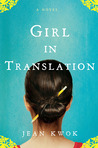 Girl in Translation by Jean Kwok
My rating: 3 of 5 stars
For me, the biggest problem with Jean Kwok's Girl in Translation is that the love story felt contrived and instead of adding to our understanding of protagonist Kimberly as a girl caught between two worlds, it just distracted from her larger story. Actually when I think of it, many of the characters in the book felt contrived rather than true-to-life, but because the love story took up much of the ending (including a major twist) it really stood out as out of place. Girl in Translation does contain some poignant insights into life as a first-generation immigrant grappling with poverty and ambition, but they were not as fully-realized as they could have been.
The entire novel spans almost two decades, if we count the last chapter set "twelve years later." When it opens, Kimberly is an 11-year-old who, along with her mother, has just arrived in Brooklyn from Hong Kong. (Her father passed away when she was very young). Kimberly's Aunt Peggy has helped the two family members make a life in America, but it turns out that this life includes a squalid, vermin-infested, heat-lacking apartment and a job in a Chinatown clothing factory (yes, this means child labor).
Because Kimberly had displayed exceptional academic talent in Hong Kong, she decides to use this talent to work to better her family. It is a long path up for a girl who speaks and understands little English and struggles to fit in socially and culturally at school. However, after a few years in public school, Kimberly's smarts land her a full scholarship to a prestigious private secondary school.
An early adversary in the novel turns out to Aunt Paula, who happens to be the owner of the factory. It turns out that Aunt Paula has been purposefully holding Kimberly and her Ma back (not helping them find a safer apartment, demanding more and more work without more pay) out of a jealous spite. The reasons for Paula's jealousy are briefly explored, but for the most part she comes across as a two-dimensional stock villain.
It is at the factory that Kimberly meets Matt, the love interest mentioned above. We see her feelings for Matt develop over her pre-teen years, but by the time the two actually get together (there is "another woman" named Vivian who seems to only exist for dramatic/romantic tension) their interactions seem to be reduced to infatuation. This would be understandable if it were just their teenage relationship that is described this way, but even 12 years after Kimberly makes a fateful decision impacting their future, the descriptions are still along the lines of "I stood outside his apartment because he was the most beautiful thing I'd ever seen").
This relationship could have been woven into the story in a more believable way and furthered the conflict between Kimberly's ambitions and her experiences of first love, but it just didn't resonate for me.
There is a lot of push between Kimberly's desire to fit in to with her classmates and her desire to be a dutiful daughter, but again the clichés of popular kids, parties and "fooling around" vs. studying got in the way. It was as if Kimberly were behaving the way a first-generation Chinese American teenager was "supposed" to behave rather than how a full-fleshed human being actually would.
The parts of the novel that worked the best were the ones that really allowed me to get inside the experiences of a young Chinese immigrant (the "girl in translation" of the title). When Kwok introduced Chinese turns of phrase or elements like family foods or celebrations like Chinese New Year, it made the novel a little more believable. There were some vivid descriptions of places (from the squalid apartment to Kimberly's first visit to Manhattan to her private school campus), but no grounding of the novel in time. I assumed it was set in the present-day, but there were no clues and it could really have been any time in the late 20th or early 21st century).
Girl in Translation was a quick and mostly enjoyable read, but the ending frustrated me and the entirety of the novel could have been more true-to-life. The ideas, fully realized with full-fleshed characters and more realistic relationships, could make for a truly moving novel, but as it is Girl in Translation is just so-so.
View all my reviews
Tuesday, May 17, 2016
Goodreads Book Review: We Were Liars
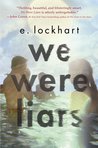 We Were Liars by E. Lockhart
My rating: 4 of 5 stars
Wow. This is the first time in awhile that a book ending has genuinely shocked me.
We Were Liars is billed as a young adult suspense novel, but it goes beyond the typical young adult novel in theme and tone, and it cannot be pinned down to "suspense": it borrows from family drama, classic tragedies like "Wuthering Heights," and fairy tales in addition to more typical thrillers like "Gone Girl" (that twist ending!). There are some elements that to some might be considered pretentious, but I thought they made E. Lockhart's novel unique in a sea of cookie-cutter young adult lit.
At it's most basic, We Were Liars is the story of four wealthy teens who summer with their families on a private island off the coast of Massachusetts. Cadence, Johnny, and Mirren are cousins and the grandchildren of the distinguished Harris Sinclair, the owner of the island. Gat is a step-cousin, and his Indian heritage makes him the family outsider in the eyes of prejudiced patriarch Sinclair. Nevertheless, the four teens form an inseparable connection.
The novel is narrated from Cadence's perspective and shifted between the present, where Cadence is 17 years old, and flashbacks to her 15th summer on the island. Cadence suffers from migraines, which result, she has been told, from a swimming accident that happened that 15th summer. In addition to her migraines, she has lost most of her memories of the time surrounding that accident. She only knows that she was discovered injured on the beach.
Memory loss has been used in a lot of suspense novels (the central protagonist in The Girl on the Train suffered from alcoholic blackouts), and it can come across as a too-easy, gimmicky set-up. However, We Were Liars explores more than just the mystery behind Cadence's accident and her missing memories. As it unfolds, we are drawn into the hidden dysfunctions in Cadence's family, where the appearance of normalcy is exalted above all else.
The novel also revolves around the bonds of friendship between Cadence and her cousins, and her budding romance with Gat. I found the whole "step-cousin" angle to be a little icky, honestly, even though the two are not biologically related (Gat is Cadence's aunt's boyfriend's child). And I felt that instead of developing the connection between Cadence and Gat, Lockhart relied a bit too much on the forbidden-love with a family outsider angle. Indead, Gat references Emily Bronte's Wuthering Heights in describing Grandpa Sinclair's disdain for him. Nevertheless, this theme is timeless, and it is interesting to see a modern spin on it.
Lockhart also uses the symbolism of fairy tales to depict the Sinclair family. After her accident, Cadence begins to write these fairy stories, all variations on a king with three daughters. The parallels to her own family, where her grandfather has three daughters, are obvious, but each short story (no more than a few paragraphs) contributes to the reader's understanding of the Sinclair family and their secrets and lies.
I won't spoil the ending. Suffice it to say that here is where the novel departs from strict realism, and while I didn't find the ending 100% plausible, it makes up for that in its emotional impact and its shocking twist.
We Were Liars is a book that can't be put in a box. Readers expecting a typical young adult novel or a typical suspense novel may be disappointed, but those with an open mind will find a book they won't soon forget.
View all my reviews
Sunday, April 24, 2016
Bucket List
My friend Athena posted this on Facebook; I'm filling it out and posting it here. They called it a "bucket list," but some of these, like "cry yourself to sleep" or "get divorced" I wouldn't exactly put on a bucket list. Whatever. The ones I've done are marked with an "X".
Fired a gun
Gone on a blind date X
Skipped school (Yeah, I was a goodie two-shoes; I don't think I even did Senior Skip Day.)
Watched someone give birth
Watched someone dying X
Visited Canada X
Visited Hawaii (couldn't afford to when my friends went :()
Visited Europe X
Visited Las Vegas (unfortunately a recent Vegas trip was cancelled due to a loss in my friend's family)
Visited Asia
Visited Africa
Visited Florida X
Visited Mexico
Visited Australia (my parents went without me :(. But I can't fault my mom for taking her dream anniversary trip)
Seen the Grand Canyon in person
Flown in a helicopter
Served on a jury
Visited L.A.
Been to New York City X
Cried yourself to sleep X
Recently colored with pencils X (adult coloring books FTW!)
Sang karaoke X
Paid for a meal with coins only X (If fast food counts than I'm sure I have)
Made prank phone calls
Laughed so much you cried X
Caught Snowflake's on tongue X (arrgh at the misused apostrophe)
Had children
Had a pet X
Been skinny dipping
Repelled down a building/cliff
Been downhill skiing X
Been water skiing X
Been camping in a tent X
Driven a motorcycle
Jumped out of a PLANE
Gone to a drive-in movie X
Done something that could have killed you X (in Athena's words: "isn't driving a car something that could kill me?")
Done something that you will regret for the rest of your life (no regrets)
Rode an elephant
Rode a camel
Eaten just cookies or cake or ice cream for dinner X
Been on TV X (I think some of my band concerts were on local tv...)
Been in newspapers X (If honor roll lists or school papers count)
Stolen any traffic signs
Been in a car accident X
Stayed in Hospital (if they mean overnight, I have not thankfully)
Donated blood (I should...my mom does all the time despite a major fear of needles, so I have no excuse)
Payed a fine in the past 12 months X
Gotten a piercing X (only ears...)
Gotten a Tattoo
Driven a standard car X
Ever owned your dream car
Been Married
Been divorced
Fell in love X
Paid for a strangers meal
Driven over 100mph
Worked in a pub
Been scuba diving
Found a dead body
Lived on your own X
Swam with the Dolphins
Parasailing Snorkeling X
Flown over Volcanoes
Visited Alaska
Visited the Bahamas X
Visited Mount Rushmore
Visited Yellowstone
Fired a gun
Gone on a blind date X
Skipped school (Yeah, I was a goodie two-shoes; I don't think I even did Senior Skip Day.)
Watched someone give birth
Watched someone dying X
Visited Canada X
Visited Hawaii (couldn't afford to when my friends went :()
Visited Europe X
Visited Las Vegas (unfortunately a recent Vegas trip was cancelled due to a loss in my friend's family)
Visited Asia
Visited Africa
Visited Florida X
Visited Mexico
Visited Australia (my parents went without me :(. But I can't fault my mom for taking her dream anniversary trip)
Seen the Grand Canyon in person
Flown in a helicopter
Served on a jury
Visited L.A.
Been to New York City X
Cried yourself to sleep X
Recently colored with pencils X (adult coloring books FTW!)
Sang karaoke X
Paid for a meal with coins only X (If fast food counts than I'm sure I have)
Made prank phone calls
Laughed so much you cried X
Caught Snowflake's on tongue X (arrgh at the misused apostrophe)
Had children
Had a pet X
Been skinny dipping
Repelled down a building/cliff
Been downhill skiing X
Been water skiing X
Been camping in a tent X
Driven a motorcycle
Jumped out of a PLANE
Gone to a drive-in movie X
Done something that could have killed you X (in Athena's words: "isn't driving a car something that could kill me?")
Done something that you will regret for the rest of your life (no regrets)
Rode an elephant
Rode a camel
Eaten just cookies or cake or ice cream for dinner X
Been on TV X (I think some of my band concerts were on local tv...)
Been in newspapers X (If honor roll lists or school papers count)
Stolen any traffic signs
Been in a car accident X
Stayed in Hospital (if they mean overnight, I have not thankfully)
Donated blood (I should...my mom does all the time despite a major fear of needles, so I have no excuse)
Payed a fine in the past 12 months X
Gotten a piercing X (only ears...)
Gotten a Tattoo
Driven a standard car X
Ever owned your dream car
Been Married
Been divorced
Fell in love X
Paid for a strangers meal
Driven over 100mph
Worked in a pub
Been scuba diving
Found a dead body
Lived on your own X
Swam with the Dolphins
Parasailing Snorkeling X
Flown over Volcanoes
Visited Alaska
Visited the Bahamas X
Visited Mount Rushmore
Visited Yellowstone
Subscribe to:
Posts (Atom)